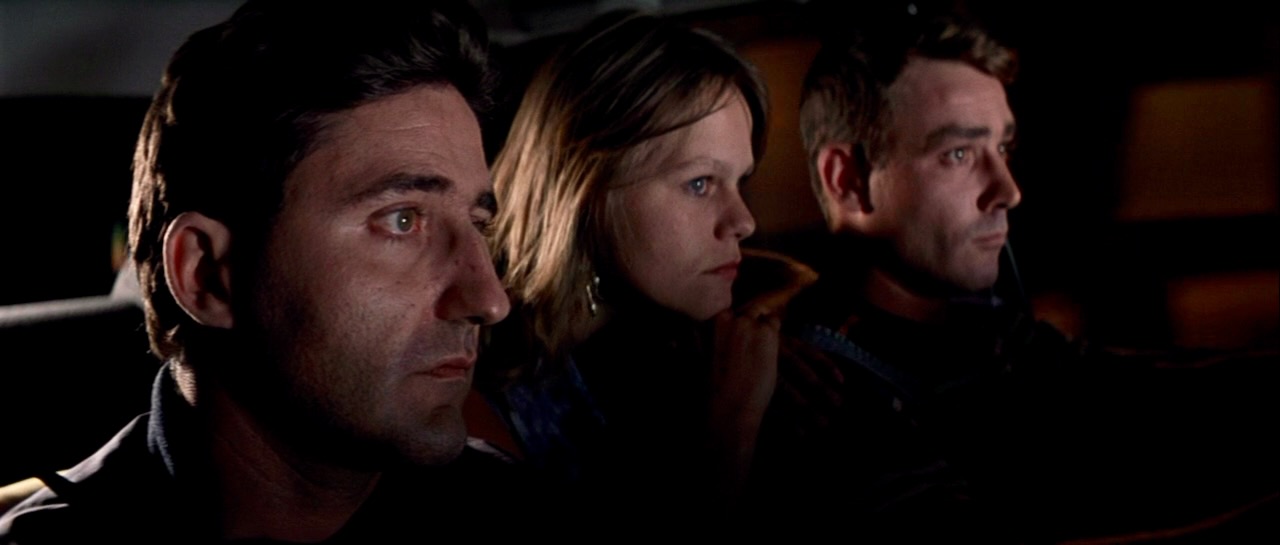
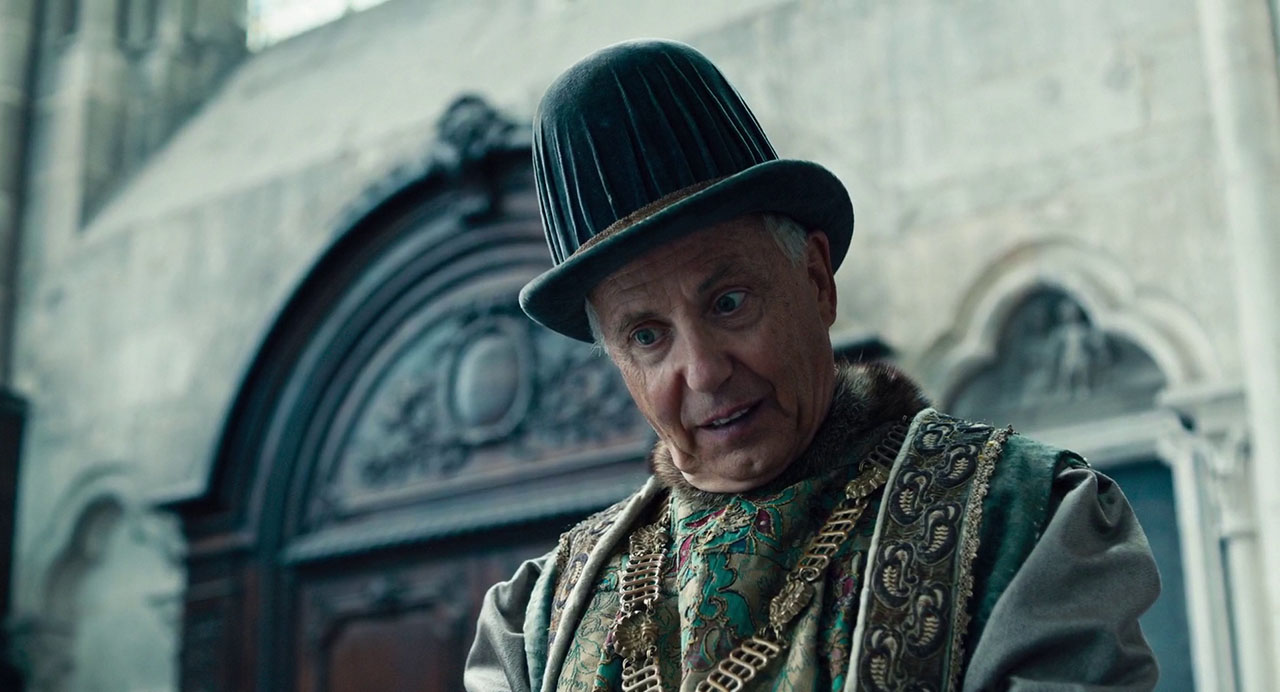
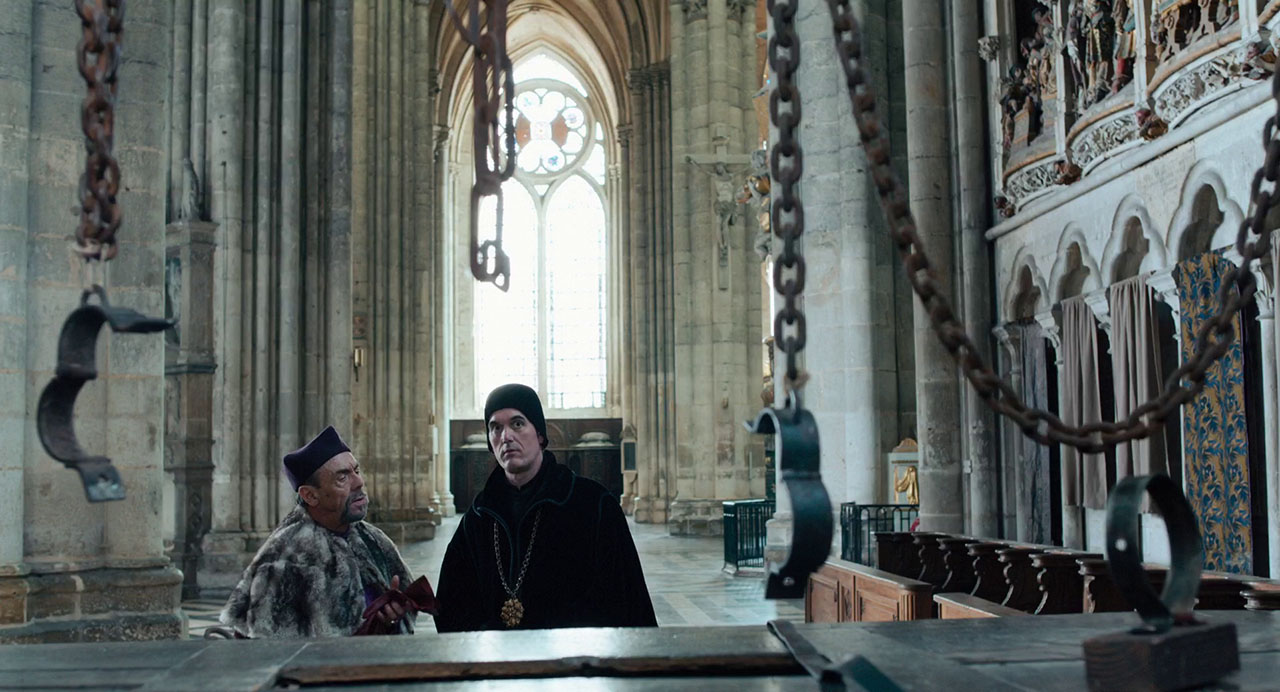
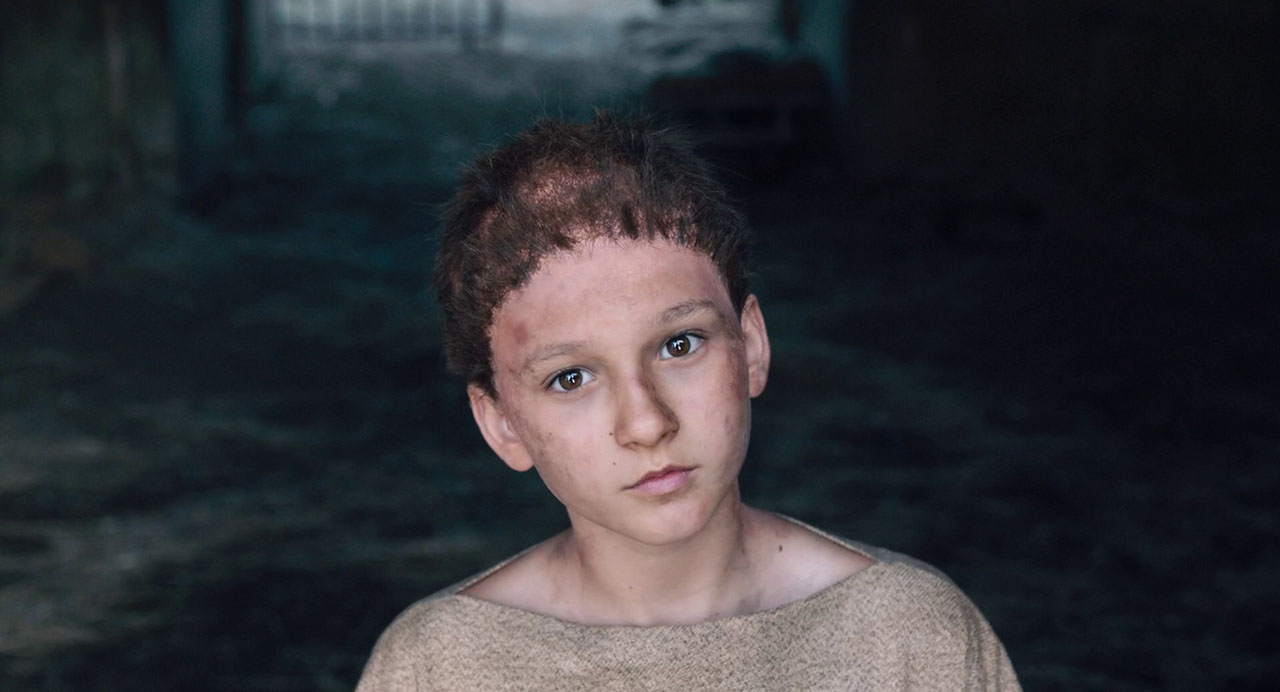
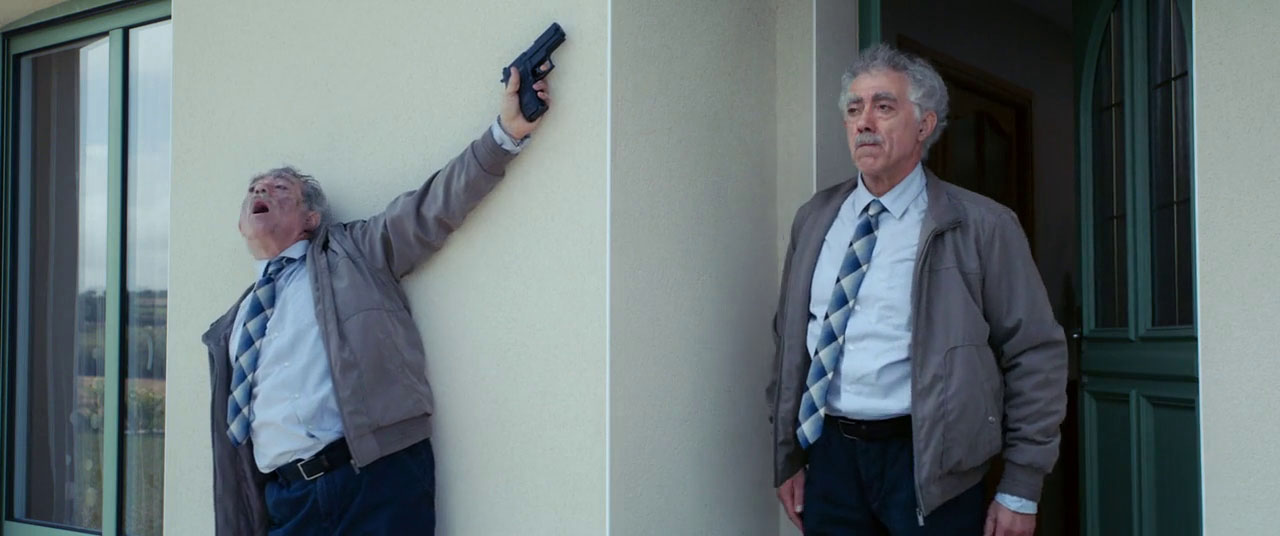
Slow cinema starring a vacant-eyed cop reacting to news of a raped/murdered little girl, whose body we get a nice long leering stare at. The cop just wants to hang out with his neighbor Domino, but she’s dating bus driver Joseph, whose route goes right past the murder site. After some investigation, he finds Joseph arrested in boss’s office, tearily confessing, then our cop goes home and has a long hug and cry with Domino, then cut to the cop in handcuffs. Think I liked this best of Dumont’s pre-Quinquin slow art films, though somehow I missed “a brief shot that shows Pharaon levitating in his garden.”

The mythology of warring intergalactic races (the evil Zeroes and noble Ones) battling for control of the hearts of humanity is cheesy even for Dumont, but his French countryside weirdos-getting-exponentially-weirder schtick is on point. Both sides are pretty ramshackle, the antichrist kid Freddy is pretty easily kidnapped then re-kidnapped. If you follow the characters and story, it’s all deflated and lame – the long pauses and awkwardness and mismatched performances are the whole show. The space forces collide, forming a black hole over Earth which annihilates all of them and the police car belonging to Team Quinquin – Carpentier gets all the dialogue, the Captain now too twitchy to handle anything else. Elsewhere, the cellphone demon was in the latest Three Musketeers reboot, angel Jane in the latest Count of Monte Cristo.

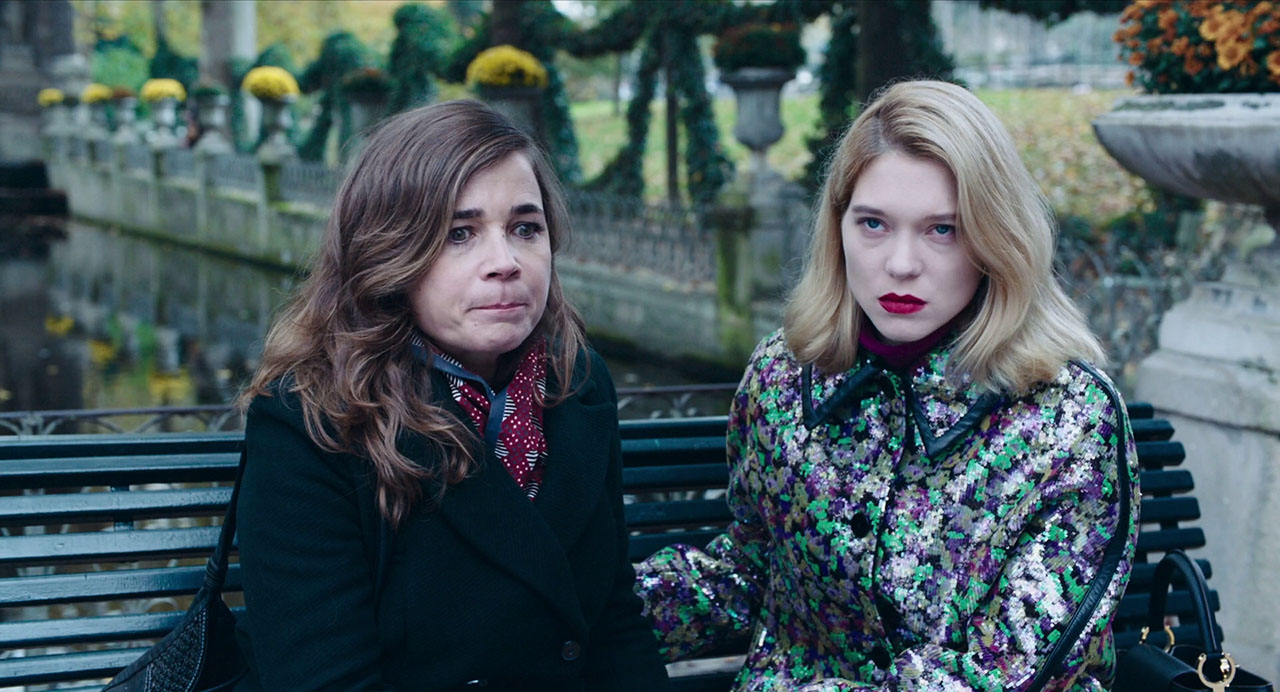
Léa Seydoux is a famous TV newscaster, known for onsite foreign reports and for giving playfully confrontational questions to the president at home, lives with husband and kid in an insane performatively-rich house. At work she gives too much on-camera direction, saying “got that?” a half second after every speech – her segments must be a nightmare to edit. There’s a minor car crash (she rear-ends a motorcyclist) and a major one (her husband and kid plunge off a cliff), and every personal tragedy or professional fuckup is just another tabloid headline. She starts actually caring about the stories she covers, but the public image and end result is the same.

France will be seen next in the Cronenberg, her TV producer is in the brand-new Quentin Dupieux and her husband was in Personal Shopper. Doesn’t feel very Dumontian, except when accident victim Baptiste is around. It’s all very nice-looking (and with great music by the late Christophe) but a traditional media/celeb satire seems like small fries after Slack Bay.

France with producer:

France with husband:

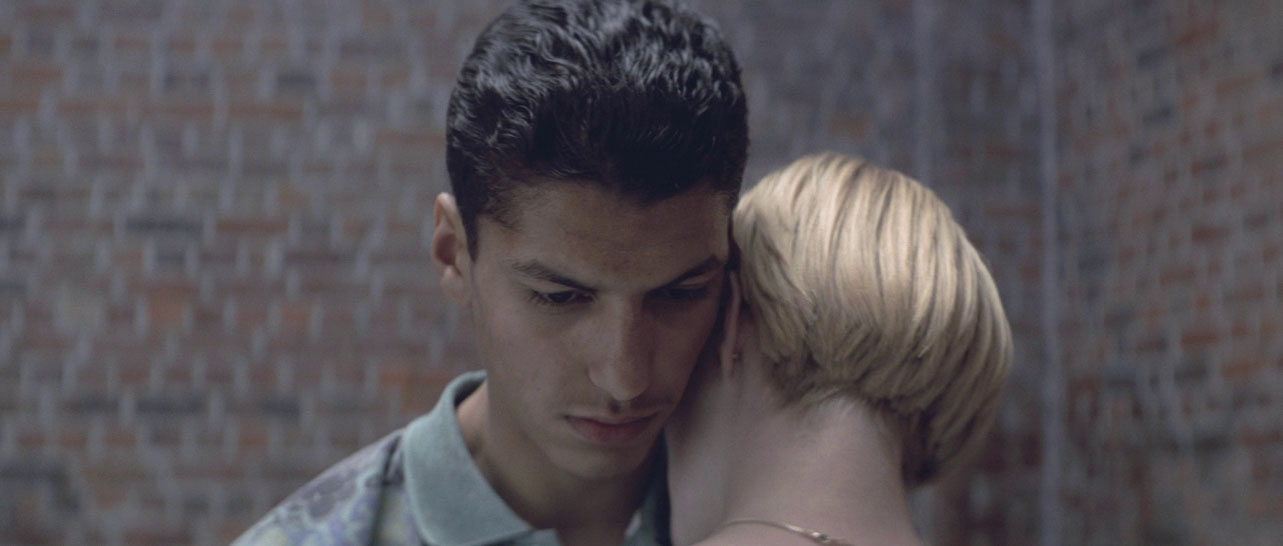
Finally getting to Dumont’s debut. Parts of this movie about a dimwit boy in a nowhere town look familiar from Lil Quinquin – a yard where they fix up their car even looks like a location from that movie, and there’s a character named Quinquin. But this was before Dumont had learned to be funny or unpredictable, from his punishing slow art cinema days. Maybe the crappy marching band was supposed to provide levity, but in the end it’s simply no fun to watch a crappy marching band. This doesn’t give me much hope for L’Humanité – I’m guessing that’s as misleading a title as this one, which follows a kid who Dumont wants to portray as a sensitive soul, with his epilepsy and pet finch and cute girlfriend. But the kid’s also a horrible racist, and finally catches the Arab guy he’d seen hanging around with his girl, and uses his head as a soccer ball. The non-pro actors in this stayed non-pro. I was surprised to recognize the finch-song contest from Arabian Nights.

Nicholas Elliott for Criterion:

Rather than a description of the film’s contents, the title is an unusually active element of the viewing experience, a riddle that prompts the viewer to see beyond the low horizons of Freddy’s existence and imagine how the spiritual might be reintroduced into this context. In the trickiest of ways, Dumont titles the film to prime us to look for good where there is evil. Yet he does not ask us to like Freddy, only to accept that he exists…

Earliest Dumont I’ve seen and my least favorite, which suddenly makes me hesitant about the two that just came out on Criterion. Also our second movie in a row with a girl peeing on camera. I’d heard this might be a horror, and it’s not, it just has really bad vibes.

David and Katya ride around the American West in his hummer, listening to twangy French songs, never wearing seatbelts. She gets unaccountably sad after asking what he’s thinking and he says nothing. They have splashy hotel pool sex, sulk at each other about basic things, later do some nude rock climbing. He’s a film person of some sort, and yeah this is what I imagined film people do between shoots. The sex and the fights both escalate and she almost leaves one night. Then out of the blue, truckers drive them off the road, smash his head and rape him, and I guess back at the hotel he loses his mind and kills them both.

Katya was in major films by Claire Denis and Leos Carax before her premature death. David’s been in a couple things, but most importantly, when he wears his round sunglasses and lets his hair flop around, he looks like Michael Showalter’s Doug from The State.

Doug and Katya:

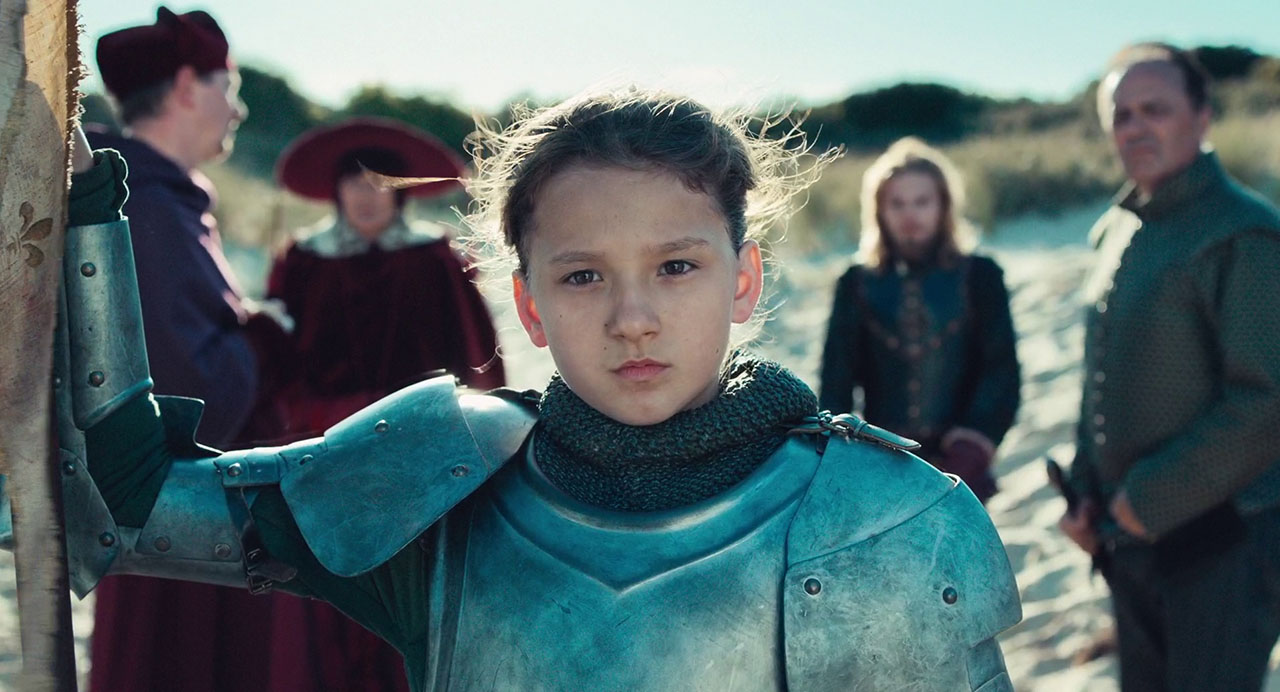
Halfway through Jeannette, little Lise aged-up to older Jeanne Voisin, and now due to a casting snafu, she’s aged back down to Lise for the battles and trial. It’s Jeannette Redux for the battles – all conversations in the desert, Joan “sings” a song in voiceover, her horse dances to a drumbeat then all the horsemen dance around her in a choreographed pattern. Mostly notable here is Lord de Rais who looks 18 with lion-hair.

Why does the king (Rohmer actor Fabrice Luchini), who everyone respects, act like such a sleazy scumlord and wear a juicer-hat?

The start of the trial is all talk, but livened up by the actors, especially church master Nic l’Oiseleur (below, right), a Quinquin-caliber performer. The church is an infinitely more gaudy setting than the Passion or the Bresson, and all the non-Joan actors are more interesting than those in the other films – shot mostly in close-up but it’s a large echoey room so they’re all shouting. It’s maybe a more eccentric movie than the first, and for the better… not a big fan of the vocal songs, but the instrumental music is just great.

It’s a good thing Criterion is releasing the slow-moving serious-art early Dumont films on blu-ray, because I need to catch up, and this also gives me auteurist justification for absolutely loving this goony miniseries where aliens visit the town of Lil Quinquin and start duplicating the residents. The twitchy racist cop is given more screen time than ever, but I’m into it this time. Random resident Mr. Leleu gets copied, then Coincoin’s brother Dany, his ex-girl Eve, D’nis, then the captain himself. The Captain and Carpentier find out about the clones, are on the case, guns drawn, with the kids at their side, and then instead of solving the alien mystery, the “Cause I Knew” girl returns as a zombie and the series ends with a full-cast singalong.

A musical Joan of Arc story soundtracked by a metal band! It’s a bit of wacky fun – except it’s not, really… you can still detect the serious Dumont of Hors Satan in the dramatic scenes (which stop the movie dead between musical numbers) and the comic Dumont of Quinquin in the playfulness and the casting, and this movie hangs weirdly in between. The two girls playing the lead seem very much like girls, without the fervor and obsession of other cinematic Joans. These Jeannettes are still figuring out what God wants from them, and their own headbanging and awkward dances (to metal songs interrupted by sheep) is filmed at about the same level as the religious figures and miraculous apparitions. It’s a materialist movie, if that’s the right word OR the right understanding of what he’s doing here, focusing mostly on Jeannette (with great help from her uncle D’nis) being unsure and hesitant about the journey she finally undertakes at the end.

Mouseover for headbanging:
image

Dumont goes even wackier than Lil Quinquin, though this one seemed more coherent, story-wise. I thought it’d be hard to top Quinquin‘s twitchy detective and dullard assistant, but now he’s dressed his lead detectives like Laurel & Hardy, the head cop (the fat one) rolling himself down hills when he’s too tired to walk, and simply inflating and floating away at the end.

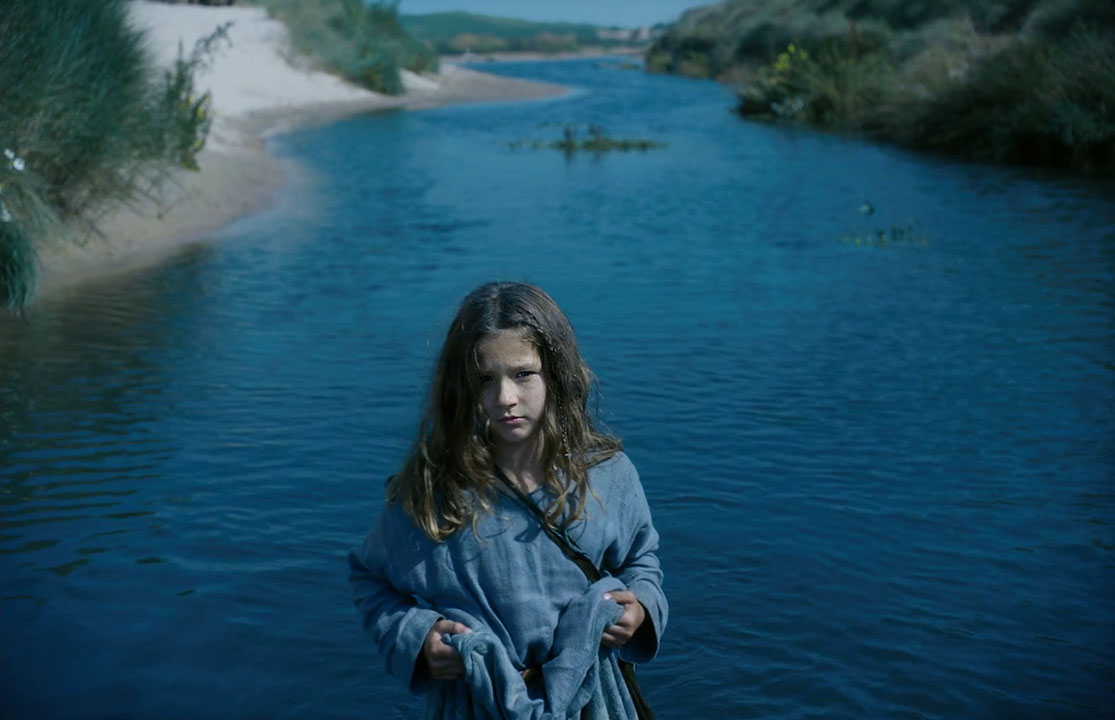
Just like Quinquin was named after the lead rapscallion from a poor, possibly criminal family, the French title of this movie was Ma Loute – the nickname of the young man from the only family that seems to live in this picturesque rural town. I suppose they fish, though when a wealthy family arrives at their palatial summer home, we discover what else they do; they kidnap, murder, and eat the rich. The richies are so ludicrously over-the-top (and inbred, it turns out) that it’s tempting to root for the local brutes, except the richies also have ringers in Juliette Binoche and a beautiful/mysterious transgender girl who has a short-lived romance with Ma Loute. Also they’re just too damned silly to wish death upon.

Sicinski describes the richies:

Descending upon the bay for the summer are upper-class cityfolk, bizarre caricatures of humanity sprung from some Gallic division of Monty Python. The Van Peteghems are “led” by spastic, bumbling André (Fabrice Luchini), his prim, lachrymose wife Isabelle (Valeria Bruni Tedeschi), brother / cousin Christian (Jean-Luc Vincent), a sort of lacquered descendent of brain-addled mystic Johannes from Dreyer’s Ordet; and eventually, Aunt Aude (Juliette Binoche), a wailing, flailing hysteric whose behavior resembles that of a regional dinner theatre actress on nitrous oxide.

I never would’ve guessed that the richie paterfamilias had been in Rohmer films, but there you go: he played the lead in Perceval. Tedeschi is lately known as a director, was also in Nenette & Boni and Saint Laurent. Vincent and Binoche costarred in Dumont’s much more serious Camille Claudel 1915. Ma Loute, his dad The Eternal, his mom, his almost-girlfriend Raph and the two cops just came out of nowhere.