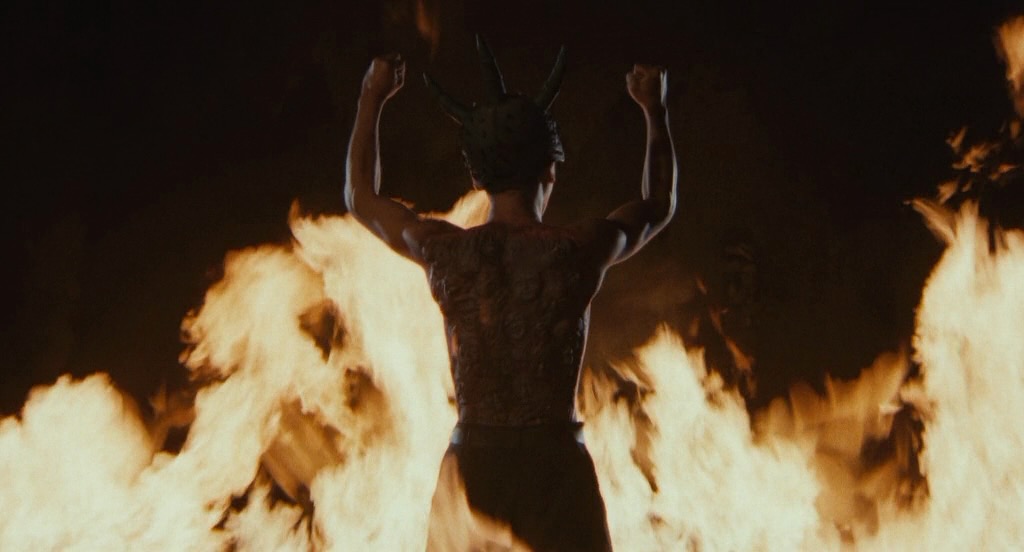
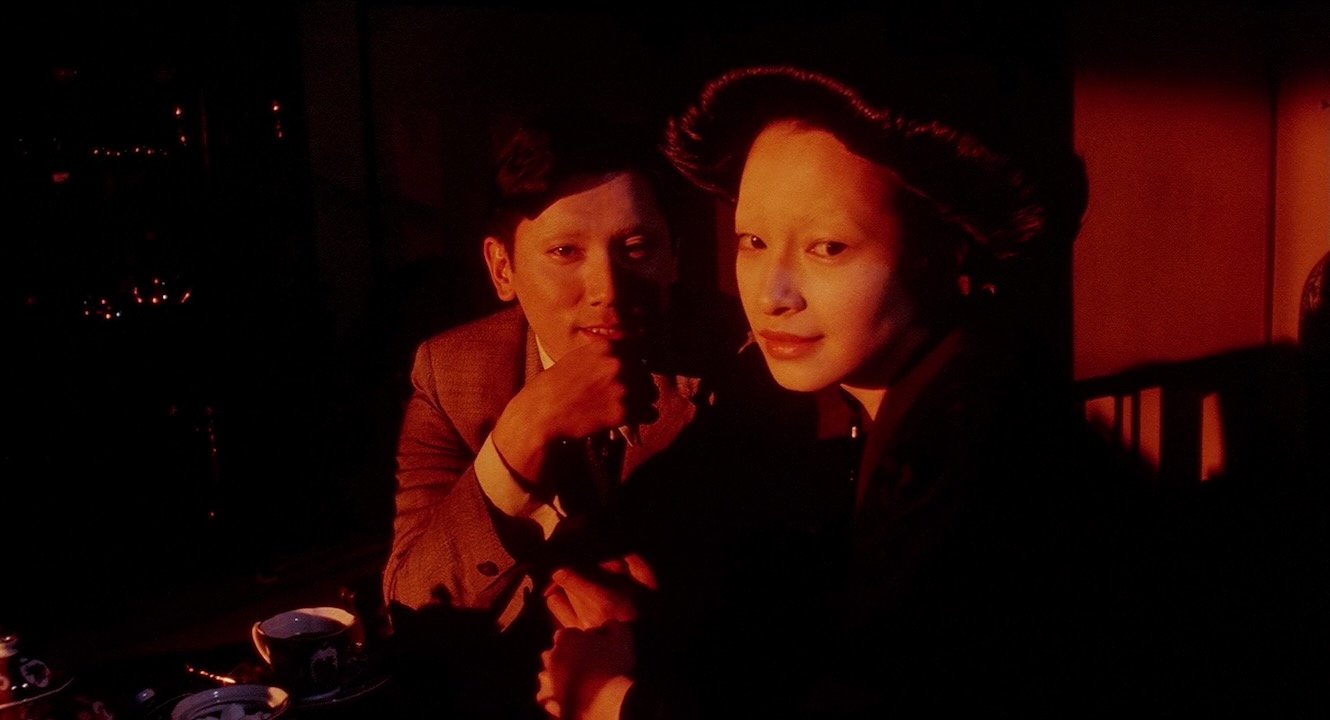
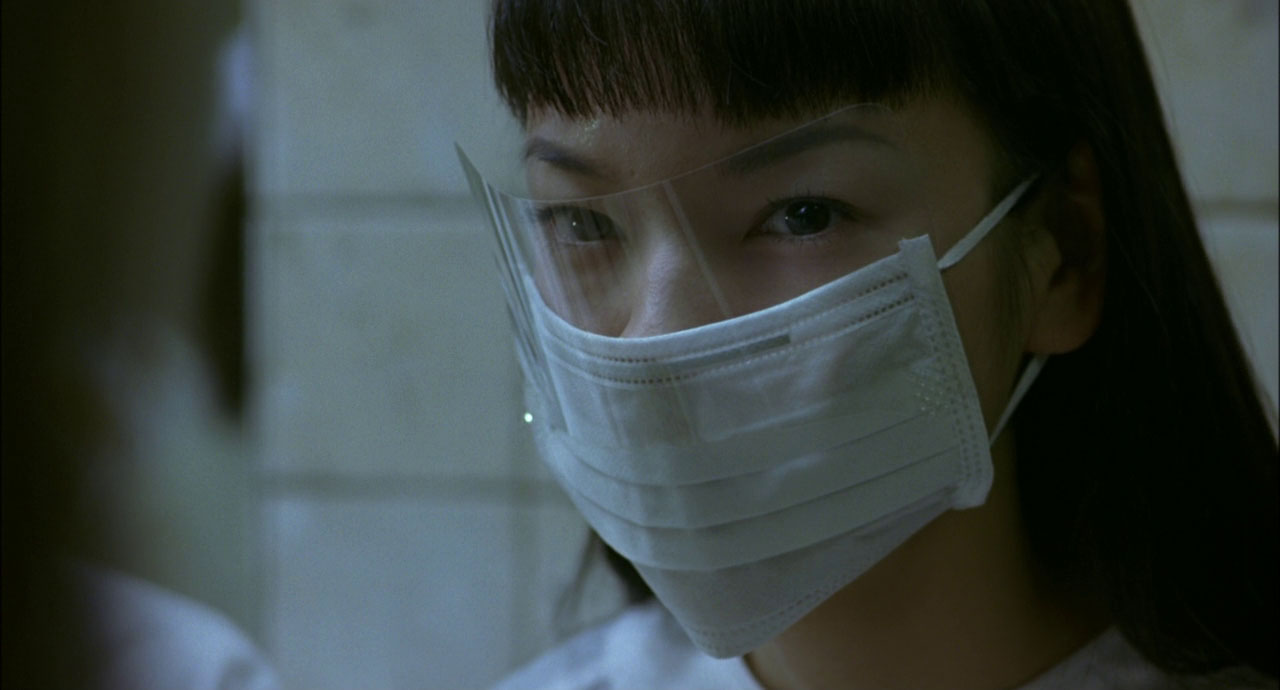
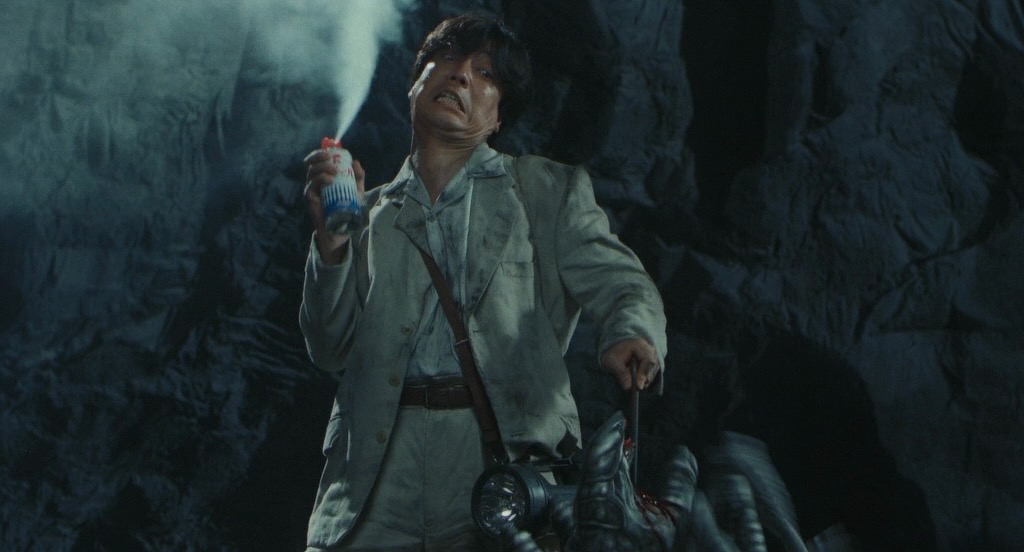
After the relentless Tetsuo movies this one is going for an Obayashi contrast: demonic possession and rushing camera blur and bodily explosions amidst a medium-paced, brightly colored daytime plot with upbeat made-for-TV music. A few good stop-motion and matte painting shots, then after the initial goblin attacks the movie has lost its juice, and they’re just spraying flying spiders with a can of wd-40. Feels like a studio with a bland cursed-high-school story hired an edgy young filmmaker to helm, and each side brushed against each other’s limitations.

The goblin is hard to deal with, since people who see it tend to chop off their own heads. Student Masao has an exploding growth on his back, a Tsukamoto specialty. Disgraced Archaeologist Hieda (Yumeji / Mr. Katakuri) shows up at a high school with homemade ghostbusting equipment, summoned by a professor who then got Evil-Deaded by the goblin’s-eye camera. Masao and Hieda and the school janitor (the non-bald doctor in Dogra Magra) have to piece together the mythology and save the world from evil, I suppose.

Yukio (Bird People In China star Masahiro Motoki) is a doctor who detests poor people.

Rin (Ryo of Harmful Insect and Scabbard Samurai) is his wife, has lost her memory.

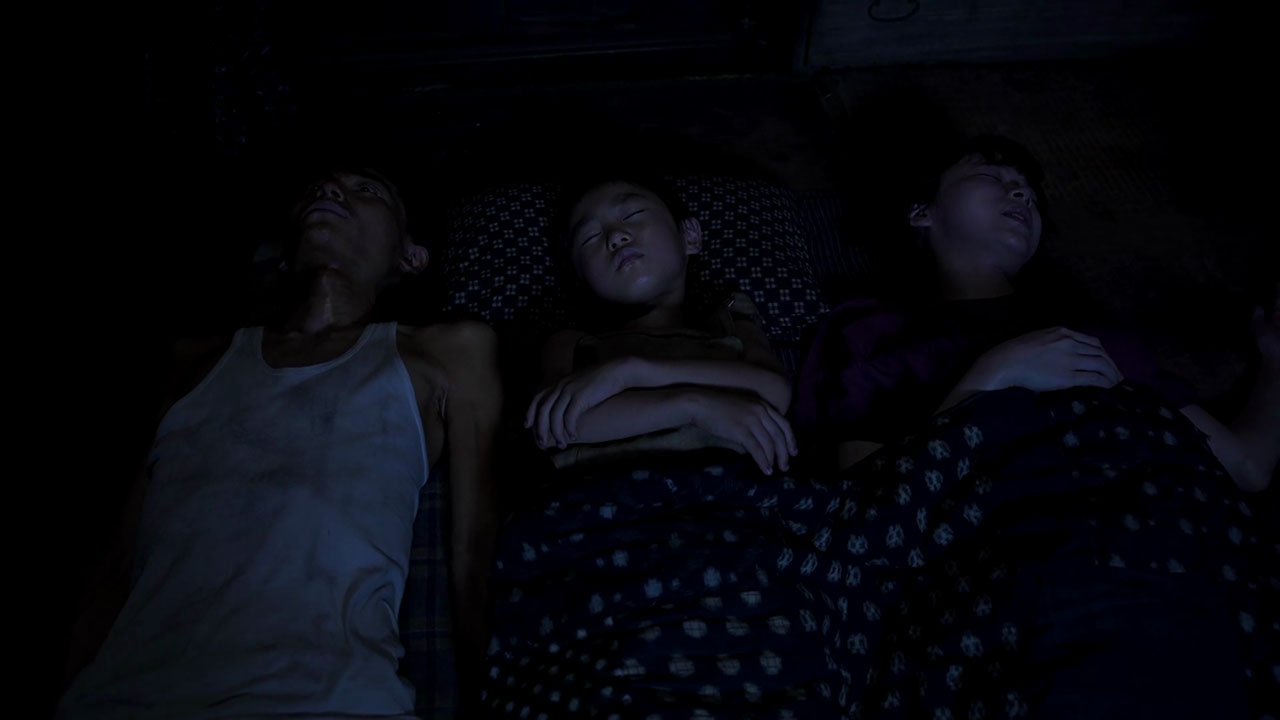
They sleep like this:

One day, the doctor’s fur-lined bloodshot-eyed doppelganger arrives and kills the doctor’s parents.

Then the doppelganger throws the doctor down a well.

He torments the doctor, reveals the truth about their parents and the wife, all the plotty drama less convincing than the excellent visuals and cool music.

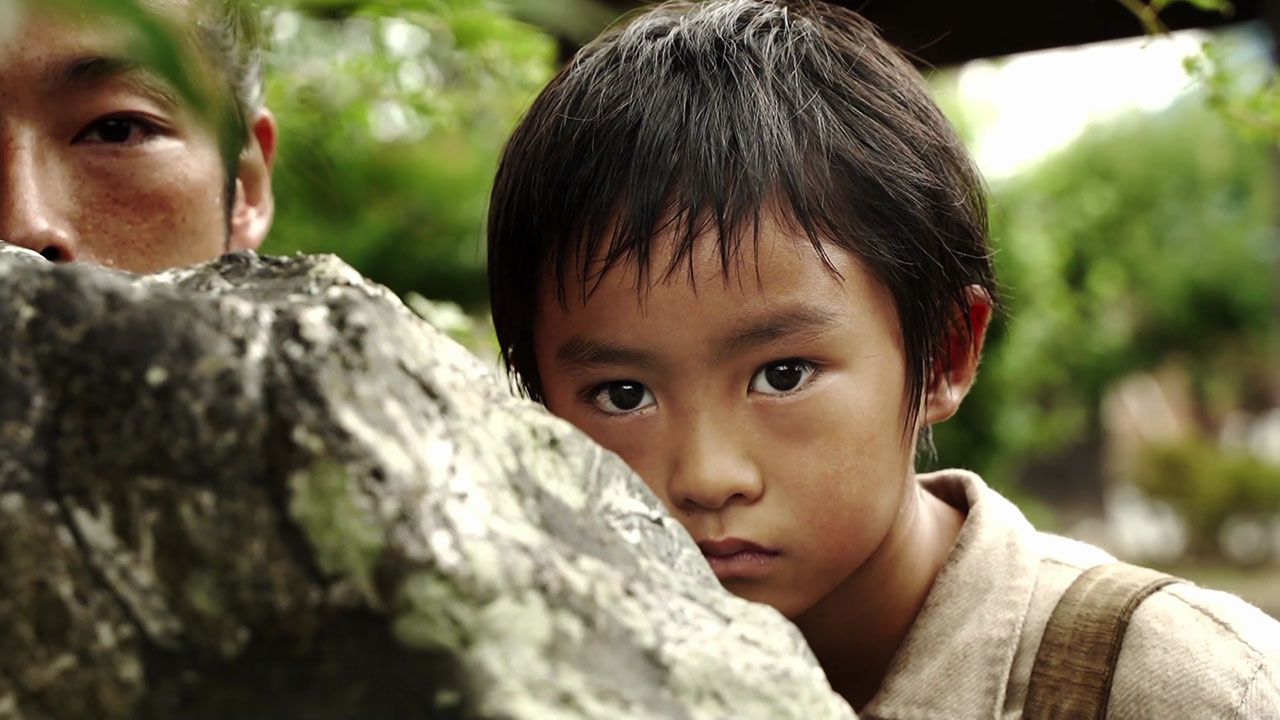
Restaurateur turned post-WWII desperate prostitute Shuri calls a kid “stray dog” right after I’d been thinking of the movie Stray Dogs because of the condition of her apartment walls. She takes in wannabe-customer Hiroki Kono and our lead kid – three fuckups acting like a makeshift family – though I didn’t realize the kid was the lead until the adults blew up at each other and the kid left to survive elsewhere.

Next he falls in with Mirai Moriyama, inheritor of Shin Kamen Rider‘s legacy. Mirai is excited that the kid has a pistol and enlists him in a sketchy revenge plot against his ex-superior officer. As with Kitano I’m catching Tsukamoto’s latest after missing his last two – one of which was also a late-WWII desperation drama. Unlike Kitano, it seems he’s settled down into prestige-drama mode, with only subtle hints of the handheld hopped-up maniac who made his early films.

“Kamen” just means masked, he’s a masked rider. More shin silliness, this one hitting some Smoking Causes Coughing heights of absurdity. Professor Shinya Tsukamoto explains all backstory to our Rider (Sosuke Ikematsu, star of Tsukamoto’s Killing) then promptly dies, melting into soap bubbles, as do all deceased heroes and villains. Rider is strong, punching henchmen into fountains of blood, teams up with Ruri-Ruri (Minami Hamabe of the new Godzilla Minus One) to defeat a series of insect-themed baddies.

Some real Evangelion-ish lines, and I like how the movie comes to a full stop for long minutes while a character calmly unpacks their emotions. Android Ruri’s evil brother Butterfly and Rider 1 have a fatal duel, but there’s a second Rider (he and Butterfly were both voices in Inu-Oh) who will carry on the legacy, going on new adventures with Rider 1’s spirit inside his helmet, a Heat Vision & Jack situation. Government guys Tachi and Taki are the only actors who’ve been in all three Shin movies. One villain was Ichi The Killer himself – why do I never recognize him? – another played the wife whose husband is an alien in Before We Vanish.

“Dad, I’m worried about you. You need to get back into biotech research.” Gotta give it up to Shinya for making the same exact cyberpunk movie for the fifth time. Diminishing returns, but once again a guy finds himself hulking out, turning into a machine.

Desaturated greys and browns except for a few popping colors. It’s in English; the dialogue and the plot being spelled out more explicitly are both weaknesses. When the action comes it’s prolonged and incoherent. The soundtrack is more pounding than ever. The clean HD photography clashes with the jittery underground lo-fi intentions. I did not hate it.

Hulking-guy’s son is run over by Shinya. He learns he was born from an android replica of his dead mom… he gets blasted by a hitman, also shoots himself in the head and lives… tetsuos a few city blocks. I wrote “I think Shinya wanted to be a suicide cult leader,” but I don’t know if I meant the director himself or the character he’s playing.

“Destruction is all I need.” Tetsuo II was the right movie to watch after Videodrome, another analog video fetish film where flesh becomes guns.

Thugs keep tormenting a family, stealing their young son. They shoot the dad in the chest with some gadget while kidnapping the kid in a record store, then later, dad’s arm turns into a weapon and he blows the kid to bits.

The kidnappers return to a subterranean fight club factory of machinery-weightlifting space monkeys, where Goth Lord Shinya considers the transmogrifying gadget a success and orders everyone to be injected, to build an army. But the dad wasn’t transmogrified, it turns out he ironmanned himself out of pure rage, and he has a history of doing this. Same cast as the previous two movies, and practically a remake… it gets too plotty (Goth Shinya is IronDad’s brother), but if the alarming monochrome cyberpunk vision of part one isn’t fresh in your mind, it’ll do.

–
The Adventures of Electric Rod Boy / The Great Analog World (1987)

A half-feature made between Phantom of Regular Size and the first Tetsuo. Sure it’s yet another human-machine-merge movie (and watched the same week as Videodrome and Titane, wow) but this adds new twists to the Early Tsukamoto playbook: a vampire gang having covered the skies with a nuclear cloud so they can roam outside without fear of sunlight.

Boy with an electricity pole growing out of his back seems to be a gag, so he’ll conk his tormentors when he bows apologetically. The movie opens with silent-film silliness, and contains some extreme stop-motion, both in creeping metal cables winding over people and in the hoverboards the vamps ride down the city streets. Our guy travels into the future, meets Woman In Glasses (I’ve now seen Nobu Kanaoka’s complete filmed works) and an older electricity-pole guy who claims only they can save the world. Indeed, the Rod Boy apologizes so hard after his professor friend is killed, he takes out the robot vampire powering the global destruction machine.

The Phantom of Regular Size (1986)

Industrial-sounding mayhem, and did I hear a Psychic TV song? Nervous guy is attacked by a Freddy Krueger type in the subway, transforms into a scrap-metal mutant-man who kills his girlfriend with his giant spinning drill cock. A psychically linked rival appears, they face off and travel in stop-motion like The Wizard of Speed and Time. Looks wonderfully cheap and frantic, even the titles are scrawled Brakhage-style in rapid partial title cards.

–
Tetsuo: The Iron Man (1988)

Guy goes to a workshop, cuts his leg open and shoves a metal rod in, but only seems to realize the horror of this after it becomes infected, then he runs down the street until hit by a car. Our new guy, who turns out to have been the driver in that last scene, finds metal in his cheek while shaving, woman next to him on the train station touches metal thing on the floor and it becomes her hand, she chases him down and they battle… he defeats her but his feet turn into rocket shoes.

Between Maniac and Tsukamoto, subway restrooms are gonna be a theme this month. This is also my second movie in a row where the male lead is butt-raped, but this time it’s by a Doctor Octopus lady in a possible dream sequence. It’s a semi-remake of the short, but in this version the girlfriend does stab him a bunch of times with a kitchen knife and burn him with a hot pan before he drills her while unconscious. Tetsuo’s off the hook, if not the filmmaker.

See Also: Haze

Girlfriend (who helped dump the guy from beginning in the woods) is dead in the tub until the metal guy outside infects the house through its pipes and she attacks again, then transmogrifies into him, and they go speed-and-timing through the streets.

I’m sure the director had a good idea of what was happening in the last ten minutes, two metal-encrusted mutants in an extreme stop-motion battle, but I didn’t. Most of the movie is very watchable, which is only surprising since I’ve seen this before on VHS, and remember it bring a spastic, plotless, ear-piercing nightmare. In either event I wouldn’t have pinned this filmmaker to direct a prestige remake of Fires on the Plain, looking forward to that one.

For a two-hour movie it sure starts fast – there’s a “sea eruption” as the coast guard examines an abandoned craft, and a gushing leak in an undersea traffic tunnel, then a flurry of government workers reacting to the news, each worker rapidly introduced via subtitle, and this is all in the first two minutes. Little did I realize we’d mostly stick with these government workers for the next 118 minutes – this is a Godzilla movie told from the POV of the bureaucrats trying to devise a solution to the kaiju problem. I meant to watch this two years ago as part of a double-feature, but was so disappointed by the American remake, I cancelled. Should have carried on with the plan – despite its insistent focus on meetings, this is unique and excellent.

While the government works on their undersea-volcano theory, Godzilla’s tail shows up on the TV news, then as the PM is assuring the public there’s no danger of it coming onshore, it comes onshore. The fate of humanity may depend on the government’s response, but the higher-ups only listen to high-ranking officials, not anyone with actual knowledge or ideas. A scrappy young voice-of-reason deputy cabinet secretary named Rando (Hiroki Hasegawa, lead Fuck Bomber of Why Don’t You Play In Hell?, also in Before We Vanish) forms an impromptu committee of underrated functionaries to brainstorm solutions the old-guard leadership isn’t coming up with, making this the most Colonel Blimp-like of Godzilla movies.

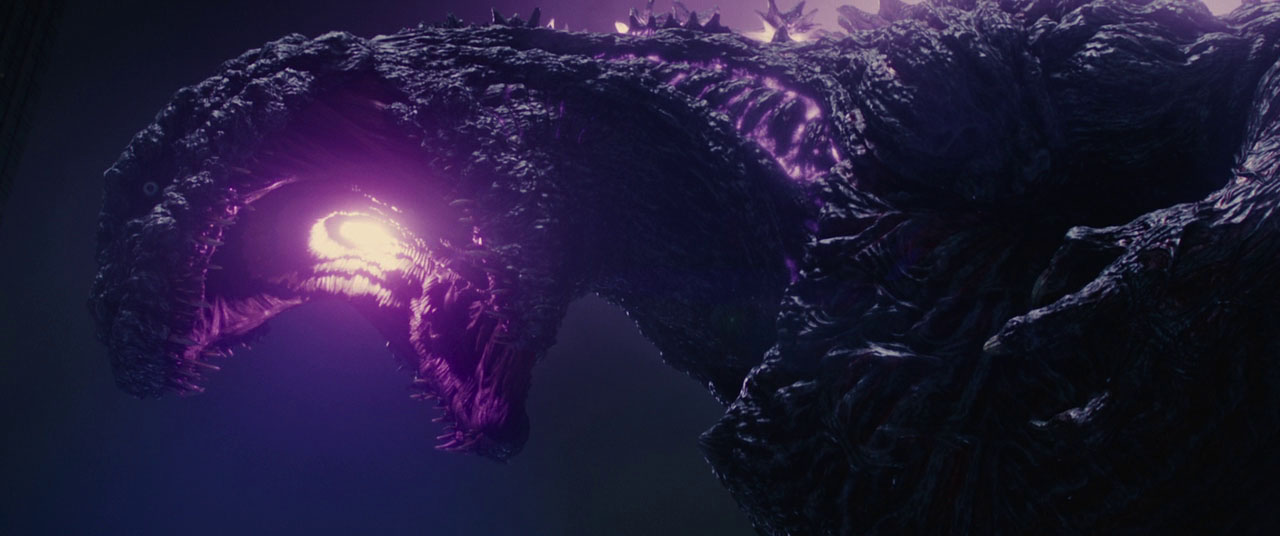
Back to the giant monster movie at hand, the thing that comes onshore is… not Godzilla? I thought it might be a monster that G ends up fighting, but after struggling through the city and splashing blood everywhere, it collapses then suddenly evolves into the G we all know. Every time it stops and then rises again, it’s more powerful with new abilities – the fin-glowing, fire-breathing, purple-energy-releasing sequence is especially impressive.

When purple energy beams destroy the prime minister’s chopper, a know-nothing with seniority is made PM, and pretty easily convinced by the U.S. to let them nuke Tokyo. Sure he feels awful, but he has no ideas or power of his own, so it’s up to Rando, his team and his negotiations with the talented half-Japanese daughter of a U.S. senator. The movie is obvious about its politics and complaints – and again, it’s mostly meetings – but it’s also excellently paced and has outstanding monster-devastation scenes.
There are a million actors in this, each introduced with onscreen name and title, and I only kept track of a few. The PM is Ren Osugi, who shows up in every other Japanese movie I watch, and died last year. Kayoko is Satomi Ishihara of the Ring sequel Sadako 3D. Rando’s team includes Mikako Ichikawa of Anno’s live-action cartoon Cutie Honey, and Shinya Freakin’ Tsukamoto.

Not really horror, a disaster movie – made in response to the American version, which wasn’t good at all. This got a limited release in the US, where it mostly appealed to nerds on fansites, while in Japan it won best film and best director and was only outsold by Your Name. Hideaki Anno made this as a mental break between Evangelion films, the fourth of which is now five years delayed. Codirector Shinji Higuchi made Attack on Titan with some of the same cast, and directed sfx for the 1990’s Gamera movies. Anno might be following up with an Ultraman movie, and if he never finishes making the theatrical Evangelion series, I’m never gonna start watching it.
After an accident, Hiroshi (Tadanobu Asano of the Thor movies, star of Bright Future and Ichi the Killer) wakes up uncommunicative, barely knowing who he is. He returns to med school and begins a four-month class where he dissects the body of his girlfriend Ryoko who died in the crash, while he experiences lucid dreams (or returning memories, or a split consciousness) in which he spends time with Ryoko.

So it’s another trauma movie from Tsukamoto, about pain and memory and body horror – though this is a quiet and restrained movie, and we hardly see any surgery, so it’s not so much a horror movie as the poster would have us believe. This was made before two of my faves, Haze and Nightmare Detective. Employing crossfades and slow zooms into splotchy patterened walls, it effectively represents Hiroshi’s dark, blurry mindset without going into the usual Tsukamoto shaky-cam histrionics.

Ryoko:

Her parents:

Hiroshi’s own parents had apparently given up on his future before the crash and are warily glad that he’s back in med school – dad is Kazuyoshi Kushida of Oshima’s Sing a Song of Sex, and mom is Lily of Oshima’s Dear Summer Sister. Hiroshi makes the odd decision to contact the girlfriend’s parents and let them know that he’s cutting her up. They take this news better than I would’ve figured, and as the mom (the cinematically named Hana Kino of Ôbayashi’s Beijing Watermelon) is dying of cancer, dad (Jun Kunimura: the unlaughing lord in Scabbard Samurai, lead gangster of Why Don’t You Play In Hell?) seems to appreciate Hiroshi’s company. There’s also another emotionally disturbed med student, Ikumi, who blames herself for a professor’s suicide, and seems to exist in the movie mostly as an audience surrogate to stare in disgusted wonder at Hiroshi as the other students slowly abandon him.

Ikumi: